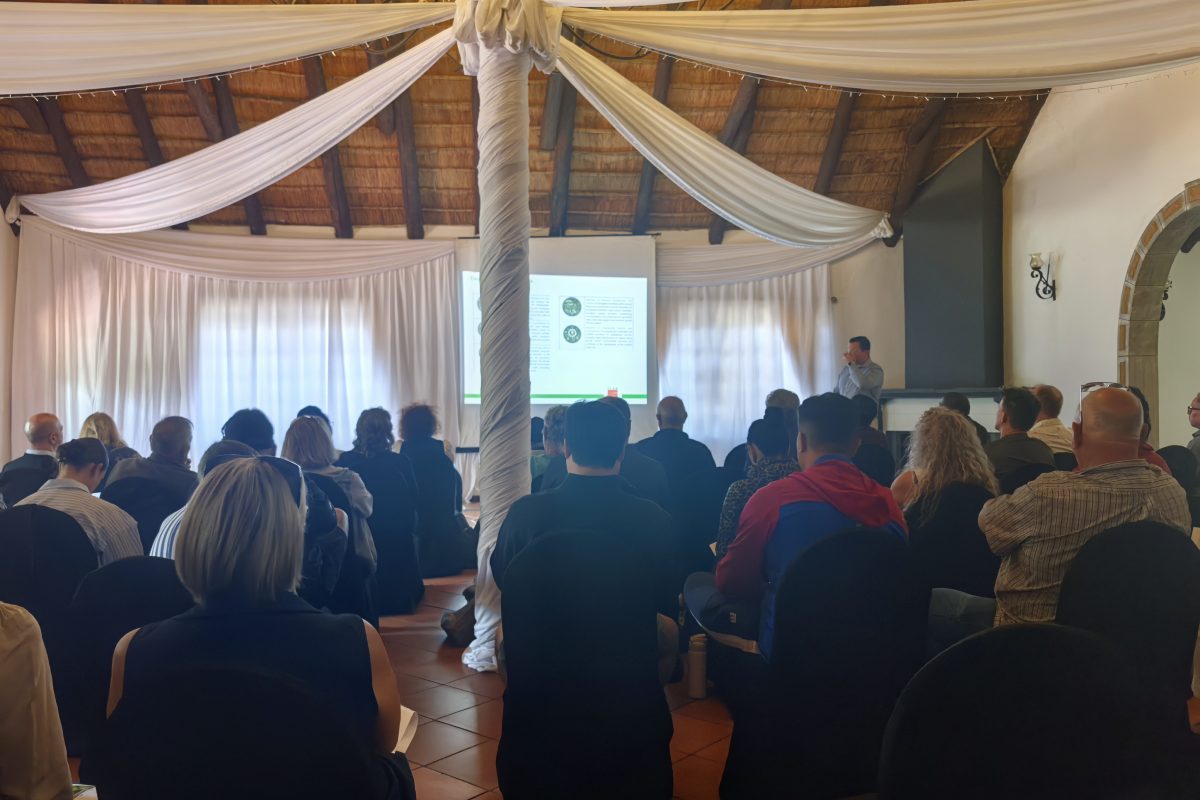
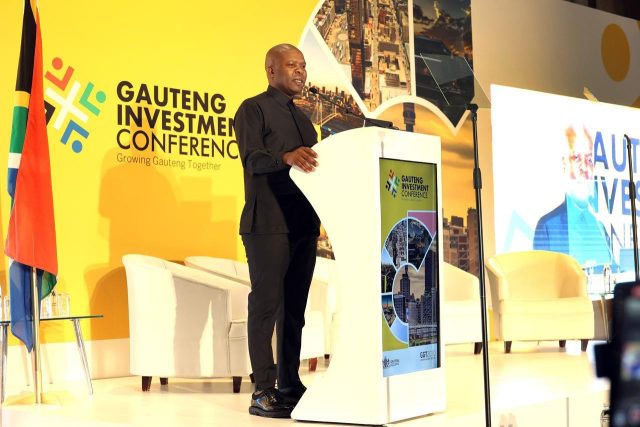
Johannesburg, South Africa: On 3 April 2025, the Gauteng International Investment Conference took place, with much anticipation and buzz. The convergence of investors, government representatives, entrepreneurs etc in Johannesburg was testament to the Province’s pointed decision to dare to lead the economic direction of both the Province and the continent. Taking to the stage at Johannesburg’s Melrose Arch, Executive Mayor Dada Morero highlighted the challenges and opportunities that characterise the City of Johannesburg, including a legacy of spatial and infrastructure inequality. He highlighted the City’s use of catalytic projects to revitalise the province and thus the broader national economy and place Johannesburg as the preferred investment hub.
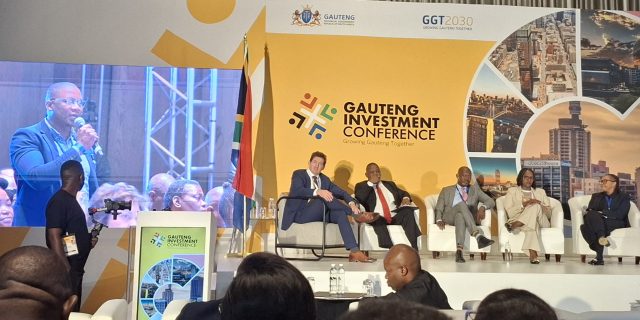
The air was thick with anticipation as investors, policymakers, and industry leaders converged at the Gauteng International Investment Conference at the Marriott Hotel. The mission was clear: to catalyse Gauteng’s economy and secure commitments towards the province’s ambitious R800 billion investment budget. At the heart of the discussion was a vision not just for economic growth but for positioning Gauteng within regional integration efforts that align with South Africa’s broader economic and trade agenda. In essence, the aim was to execute the expansion and deepening of the investment canvas of the province.
Gauteng MEC for Finance and Economic Development, Lebogang Maile, set the stage by outlining the key investment projects spanning the province’s five development corridors. These projects, collectively projected to create over hundreds of jobs, reflect a bold attempt to drive infrastructure expansion, innovation, and sustainable development. More than 300 local and international investors responded to the call, eager to explore opportunities in energy, transport, logistics, smart cities, and industrial development.
The conference, the MEC revealed, was officially launched at the JSE in Feb 2025 and aimed at catalysing the Province’s broader investment momentum and positioning Gauteng as the nerve centre for investment and tourism. Additionally, these efforts aimed at positioning Gauteng as the premier investment and tourism destination globally. The Gauteng economic development plan is anchored on skills development programmes, such as business incubation, entrepreneurship and sector specific skills development. Its draft comprehensive plan extols manufacturing as one of the key areas for the province to focus on, to catalyse industrialisation and to capacitate Small Medium and Micro Enterprises (SMMEs).
Key examples in the various sectors that the province already has an investment footing in include the aerospace and defence, automotive, chemicals, furniture clothing textiles sectors; the construction sector, with aims to modernise construction capabilities, as well as 4IR and technology. The Province seeks to increase access to funding and promote investment, while optimising logistics and increasing infrastructure.
All these interventions are aligned with the Growing Gauteng Together Vision 2030 (GGT 2030) industrialisation and the development of the township economy. The Province has also embraced the establishment of economic hubs across the mining and construction sectors as part of its economic rejuvenation programme. Between 2020 and 2025 over 1200 SMMEs have been supported with 38.7 % of these being women led and 33 % being youth led.
The Gauteng Province has 5 investment corridors, viz infrastructure, energy, housing, logistics, digital technology and from these a total of 117 public sector led projects are afoot, with 114 842 jobs expected to be created. All these coalesce to position Gauteng as a high impact factor investment destination.
Among the key highlights, MEC Maile made mention of the Smart City Project in the greater Lanseria corridor; the eastern corridor which focuses on the aerospace sector, around Ekurhuleni; while the OR Tambo area presents Africa’s first aerotropolis, to be largely used for infrastructure development that will, amongst others, allow for mineral beneficiation operations. Also worth mentioning was the Vaal Special Economic Zone which the Province seeks to utilise to unlock the economic potential of the Vaal water course and the agricultural sector.
MEC Maile further indicated that the pledges exceeded R312.5 Billion, which is far beyond the initial R300 Billion target, with investors coming from across the globe. The pledges are linked to real projects. For instance, R250 Million investment has been pledged for the health sector, R2.6 billion investment has been pledged for the chemical sector, and R5 billion pledged for a project in the aviation sector, that is the anchor of the aerotropolis in the eastern corridor. This is a demonstration of the power of private public partnerships, and will indeed positively contribute to the African Union’s economic development mandate and aspirations.
The Gauteng Provincial Government also made its own pledge to work hard to create a conducive business environment, to curb corruption, to strengthen systems, to improve reforms to increase the ease of doing business, to support research and development, to create a stable regulatory environment, to streamline licencing systems, and to continue the investments already made through strong private public partnerships. MEC Maile ended with the call to action ‘Together let’s make Africa work’.
However, as I sat through these engagements, a critical question kept surfacing in my mind: how do we make aviation, in particular general aviation fit into this vision?
Aviation as a Catalyst for Economic Growth
It is common knowledge that Gauteng is the nerve centre of South Africa’s aviation sector. It is home to OR Tambo International Airport, the busiest airport in Africa, and a key gateway for regional and international trade. It is also a hub for general aviation, with Lanseria International Airport, Rand Airport, and Wonderboom National Airport playing critical roles in cargo, executive travel, and pilot training. Any serious discussion on investment and regional integration must acknowledge that aviation is not just a sector—it is the enabler of economic activity. In many ways, anchoring of the aerotropolis in the Gauteng Province’s eastern corridor does exactly that. However, I feel there is still room for us to explore further potential affordances of aviation in the investment landscape.
So, where does aviation fit into the Gauteng Province’s R800 billion investment vision?
General Aviation: Quite Often the Missing Link in Economic Development
One of the less celebrated but high-impact economic levers in South Africa is general aviation (GA). From private charter services to air ambulance operations and pilot training, GA is an indispensable cog in the economic machine. Yet, the general trend at investment conferences is to limit discussions about aviation to commercial airlines and major airport expansions. It was refreshing to hear MEC Maile make reference to the greater Lanseria area and the development projects and investments earmarked for that corridor. General aviation stands to benefit from the infrastructure that is envisaged for the corridor.
Investing in GA infrastructure, such as upgrading runways at smaller airports, expanding hangar space, re-invigorating rural aerodromes, and developing aviation training academies, can significantly impact tourism, business connectivity, and logistics. Gauteng’s push for economic revitalization must continue to recognize the strategic role that smaller, more agile aviation enterprises can play in unlocking new economic corridors.
Consider, for instance, how enhancing air cargo capabilities at Lanseria and Wonderboom Airports could support Gauteng’s burgeoning e-commerce, agriculture, and manufacturing sectors. A streamlined GA strategy, backed by the right incentives, could transform Gauteng into Africa’s leading private and executive aviation hub. Added to this could be the creation of completely new Special Economic Zones anchored around newly constructed airports in outlying parts of the province – a model that the other 8 provinces in the country could easily emulate.
Commercial Aviation and Regional Integration
South Africa’s regional integration ambitions hinge on efficient air connectivity. Yet, air access remains one of the biggest bottlenecks to intra-African trade. If Gauteng wants to truly position itself within the African Continental Free Trade Area (AfCFTA) framework, the province must actively promote aviation-led economic corridors. The plan revealed at the recent conference will achieve exactly that.
One of the key areas ripe for investment is the development of secondary and tertiary airports that could ease congestion at OR Tambo and facilitate greater air access to neighbouring provinces and regional trade hubs like Botswana, Zimbabwe, and Namibia.
Moreover, Gauteng’s Special Economic Zones (SEZs) could benefit tremendously from an efficient, well-integrated aviation logistics network. Picture a Gauteng where high-value goods—pharmaceuticals, precision machinery, and fresh produce—move seamlessly via air freight across the region. Such a vision is not just aspirational—it is achievable with the right policy interventions and investment commitments. There is no doubt that the work being done by the Province in the various corridors will position the province as a leader in using aviation as a catalyst for economic development.
Aviation Investment: Lessons Learnt And A Call to Action
It is worth mentioning that the Gauteng International Investment Conference couldn’t have come at a more suitable time. With pressure from post-Covid economic slump and negative US-backed geopolitical sentiment, the country and the Province needs to accelerate its investments to counter these negatives.
As we reflect on the positive outcomes of the Investment Conference, and as we look forward to strengthening our economy, the urgent need for aviation to be brought to the forefront of investment discussions looms large. This will ensure that our programmes for economic growth, job creation, and regional integration are anchored on this key sector that connects industries and markets.
The next step should be the creation of an Aviation Investment Forum under the broader investment strategy of Gauteng Province. Such a forum could bring together government, investors, aviation industry players, and regulatory bodies to map out a clear investment roadmap for both general and commercial aviation.
Flying Jurist remains committed to advocating for aviation-friendly investment policies. We will continue to push for a stronger aviation ecosystem—one that supports not just major carriers but also the growing community of private operators, training institutions, and aviation entrepreneurs who are shaping the future of African skies.
The Gauteng Province has taken the first step by setting a long needed and transformative investment agenda. Now, the challenge for entities such as Flying Jurist is to ensure that aviation is not just an afterthought but a cornerstone of this economic renaissance.
Towards inclusive aviation spurred African economic growth.
Prof. Angelo Dube
CEO, Flying Jurist