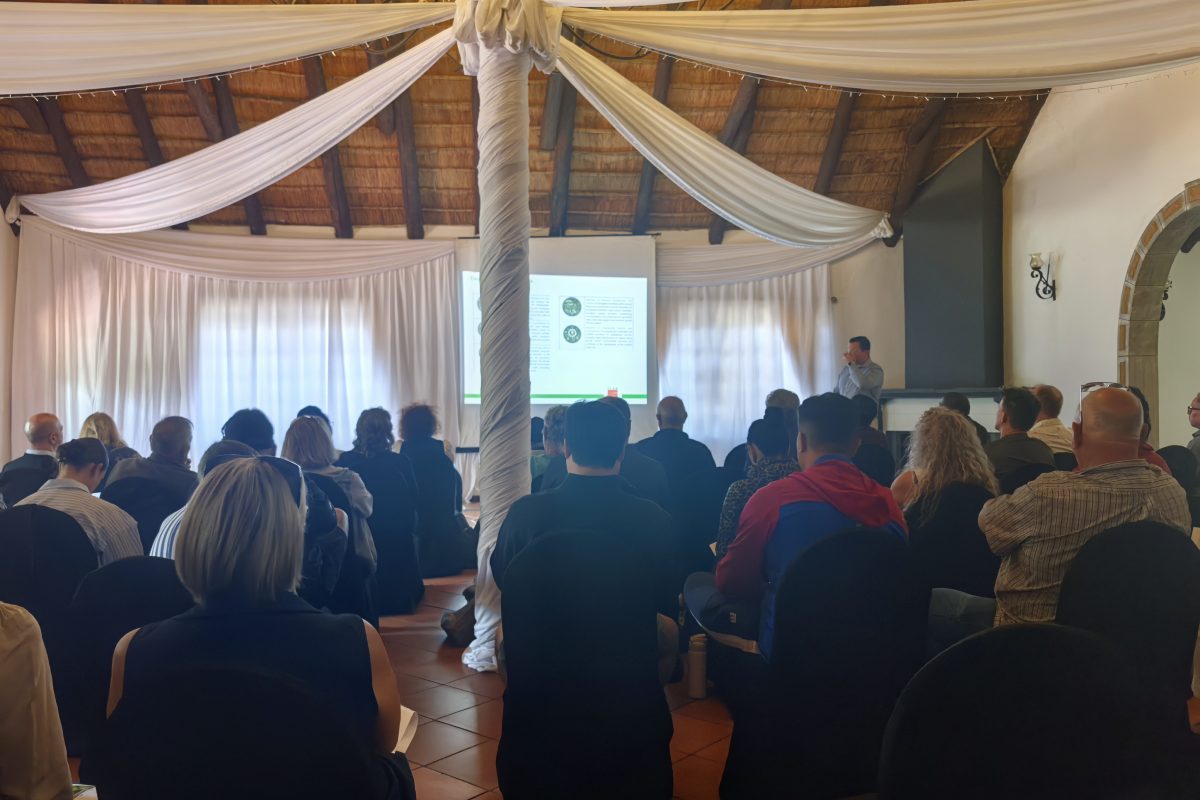
Durban, South Africa: This past week the aviation industry gathered at the beautiful Zimbali Capital Resort on the north coast of KwaZulu-Natal for the 2026 summit of the Board of Airline Representatives of South Africa (BARSA). For three days, airlines, regulators, airport operators, manufacturers and policymakers held frank conversations about the future of aviation in South Africa and across the African continent.
The discussions were wide-ranging, but one underlying question kept resurfacing: Africa has long spoken about the potential of aviation as a driver of economic development, but what will it take to move from policy aspiration to real execution?
Re-engineering Africa’s aviation landscape
Opening the summit, BARSA CEO George Mothema framed the gathering as an opportunity to confront the sector’s real pain points. The programme, he explained, had been designed with direct input from industry stakeholders. That meant the discussions would focus less on abstract policy debates and more on the everyday realities facing airlines and the broader aviation ecosystem.
Central to those conversations was the need to re-engineer Africa’s aviation landscape. Participants spoke about building resilient and sustainable aviation systems, strengthening regional air connectivity, and ensuring that air travel becomes safer and more affordable for the travelling public.
Infrastructure also featured prominently. Airports today are no longer viewed simply as terminals for passengers. They are increasingly expected to function as intelligent hubs – energy efficient, technologically integrated, and scalable enough to serve the changing needs of modern travellers.
A call for implementation, not slogans
In welcoming delegates to the province, Rev Musa Zondi, the KwaZulu-Natal MEC for Economic Development, Tourism and Environmental Affairs, emphasised the importance of a well-functioning aviation ecosystem for regional development. His remarks set the stage for a substantive address by South Africa’s Minister of Transport, Barbara Creecy.
The Minister addressed several structural challenges facing the sector. Among the most pressing is the shortage of skilled aviation professionals. This shortage places pressure on safety oversight and regulatory compliance, both of which must remain aligned with the standards of the International Civil Aviation Organization (ICAO).
She also touched on environmental sustainability, noting the growing importance of sustainable aviation fuels, carbon-reduction strategies and broader environmental protection initiatives within the global aviation industry.
Yet perhaps the most important theme in her remarks concerned African connectivity. The colonial legacy of global aviation networks still shapes travel patterns today. In some cases, passengers moving between African cities must first fly to another continent before returning to Africa. That reality, she argued, is both inefficient and economically damaging.
The solution often cited is the Single African Air Transport Market (SAATM). But the Minister was clear that SAATM cannot remain a talking point. Its promise lies only in its implementation.
Protectionism without reform, she warned, simply entrenches inefficiency.
South Africa also faces its own operational challenges. The Minister acknowledged government bottlenecks, including licensing delays and disruptions linked to flight procedure design at Air Traffic and Navigation Services (ATNS). A special task team has now been appointed to help resolve these issues, while new flight procedure designers are being trained to strengthen capacity.
She further announced that a new midfield cargo terminal will be developed at OR Tambo International Airport. The project is expected to provide a significant boost to the aviation logistics economy and strengthen South Africa’s position as a regional logistics gateway.
Aviation and Africa’s economic opportunity
One of the summit’s most engaging sessions explored the theme “Unlocking Africa’s Potential: Aviation as an Economic Driver.”
Rosemary Ramagopola of South African Airways pointed out that while SAATM exists on paper, not all African states are prepared to fully open their markets. The result is that many routes remain underserved.
For SAA, she explained, the airline’s strategy is not to compete aggressively in the low-cost market. Instead, the focus is on improving the customer experience through ancillary services, particularly in a market that has shifted following the collapse of Mango Airlines.
From the regional airline perspective, Katherine Whelan of Airlink raised an issue that is often overlooked: the shortage of aviation expertise across the continent. The technical and financial skills required to run aviation operations are still in short supply in many African markets. As expected, this prompted a discussion around the role of higher education institutions, such as UNISA in filling this growing skills shortage.
FlySafair’s Blacky Komani added a practical perspective on route planning. Airlines, he explained, operate in a world of finite resources. Aircraft utilisation is critical. Routes that keep aircraft grounded for extended periods, sometimes for ten or even sixteen hours, simply do not make commercial sense.
He praised Airlink’s route development strategy, noting that the airline’s use of regional jets from Embraer gives it the flexibility to serve smaller markets efficiently.
From the long-haul perspective, Marc Harding of Virgin Atlantic offered a striking observation. The airline’s Heathrow-Lagos route generates more revenue than its Heathrow-New York route, despite operating fewer flights. The example illustrates the significant demand that exists in African markets when routes are properly developed.

Regional integration and the logistics economy
Another important discussion focused on regional integration and the role aviation plays in facilitating trade.
Hamish Erskine, CEO of Dube TradePort, spoke about the role of special economic zones in strengthening Africa’s manufacturing and logistics sectors. Goods currently move across the continent in fragmented ways. The goal of the Dube TradePort corridor is to create more structured and efficient logistics systems that leverage aviation connectivity.
Abderahmane Berthe from the African Airlines Association (AFRAA) emphasised that a vibrant aviation economy requires a balanced ecosystem of domestic, regional and intercontinental airlines. However, fragmented markets and restrictive bilateral air services agreements continue to constrain progress.
Tebogo Tsimane of SAA addressed the persistent issue of protectionism. Governments that restrict market access in order to protect national carriers may inadvertently harm those airlines by leaving routes underserved.
Experience elsewhere suggests the opposite approach can work. Wilson Tauro of Air France-KLM noted that when the European Union liberalised its aviation market, traffic increased significantly and new airlines were able to serve cities that had previously been overlooked.
It was also noted that whilst Africa’s population is young and growing, affordability remains a major constraint. Addressing ticket pricing will require collaboration across the aviation ecosystem, including border control authorities, fuel suppliers and regulators.
Infrastructure and operational resilience
Infrastructure challenges were examined in detail during a panel featuring Mpumi Mpofu of Airports Company South Africa (ACSA), Matome Moholola of ATNS, and Siganeko Magafela from the Fuel Industry Association of South Africa.
Mpofu explained how ACSA works closely with airlines to forecast passenger demand and plan airport infrastructure accordingly. However, the work of the airport operator is often slowed by litigation from unsuccessful bidders in procurement processes. Even when ACSA ultimately wins these cases, the legal delays can stall important projects.
Moholola addressed the widely discussed shortage of air traffic controllers. He stressed that this is a global problem, not one unique to South Africa. ATNS has therefore introduced an accelerated training pipeline, bringing in more than 120 trainees per year. The organisation is also implementing retention programmes to address the loss of experienced controllers to higher-paying markets abroad.
In addition, more than R2.5 billion has been approved for upgrades to communications, navigation and surveillance systems. However, airlines should still expect occasional disruptions until the infrastructure upgrades are fully implemented.
On the fuel supply side, Magafela reassured delegates that there is currently no shortage of aviation fuel in South Africa. The main concern lies in crude supply volatility and the limited storage capacity in Durban, which can affect buffer stocks.
Fleet strategy and aircraft choices
Another session explored the changing dynamics of aircraft fleets across Africa. Adam Young of Embraer explained that more than 300 Embraer aircraft are currently operated by 66 airlines across the continent. Their popularity stems from lower fuel burn, lower operating costs and the ability to serve thinner routes profitably.
From the International Air Transport Association (IATA), Alex Stancu noted that airport infrastructure often determines which aircraft airlines can deploy. Many African airports simply do not have the runway capacity or facilities required for larger wide-body aircraft. The discussion also highlighted the influx of ageing aircraft into African fleets, alongside the growing preference for regional jets over wide-body aircraft.
Manufacturers are exploring the possibility of establishing authorised maintenance, repair and overhaul centres across the continent. This comes on the backfoot of the realisation that technical talent exists in Africa, but certification frameworks and investment structures must still be strengthened.

Cargo and the rise of e-commerce
Cargo discussions highlighted how rapidly the logistics environment is changing. Ricardo Isaac of Dube TradePort pointed out that much of Africa’s cargo infrastructure was designed decades ago, at a time when cargo operations involved a small number of large consignments. Today the reality is very different. The rise of e-commerce means airlines increasingly move thousands of smaller parcels rather than a handful of large shipments. Africa is experiencing strong demand growth in cargo, yet capacity remains limited.
Emma Da Silva of Airlink highlighted the role of belly cargo – the use of spare capacity in passenger aircraft. This approach can be highly efficient, but regulatory delays and inconsistent border procedures can undermine its effectiveness. What was clear during these deliberations was that if cargo processes remain manual and fragmented, growth in this sector will inevitably slow.
Leadership and Africa’s story
The summit concluded with a leadership dialogue featuring business leader Prof Bonang Mohale and Dube TradePort CEO Hamish Erskine. Mohale made a powerful observation: Africa must tell its own story. Too often the continent’s narrative is shaped by outsiders.
He reminded the audience that South Africa is the only country in the world to have hosted the cricket, rugby and football World Cups. Yet the economic gains from those events were not fully leveraged for long-term development. He continued, leadership, must go beyond management. It must involve building environments in which people can succeed.
Erskine echoed this sentiment. Africa is often an easy target for pessimism and criticism. The best way to change that narrative is through consistent delivery and ethical leadership.
A sector full of potential
Leaving Zimbali, one is struck by a simple reality. Africa’s aviation sector does not lack ideas. It does not lack ambition either. What it sometimes lacks is coordination, implementation and sustained commitment across the many institutions that shape the aviation ecosystem.
Yet the conversations at the 2026 BARSA Aviation Summit also revealed something encouraging. Across government, industry and academia, there is a growing recognition that aviation is not merely a transport sector. It is a strategic instrument for economic development.
If Africa gets aviation right, the benefits will extend far beyond the runway.
Prof Angelo Dube (Commercial Pilot) is a Chief Executive Officer at Flying Jurist, and founder of the Aviation Indaba. He is also the President of the Society for International Aviation Law. Prof Dube doubles up as a Professor of International Law and Acting Director of the School of Law at UNISA, where heads the Aviation Law Working Group – a consortium of pilots, aviators, researchers and lawyers who research in various aspects of aviation law. He writes here in his personal capacity.