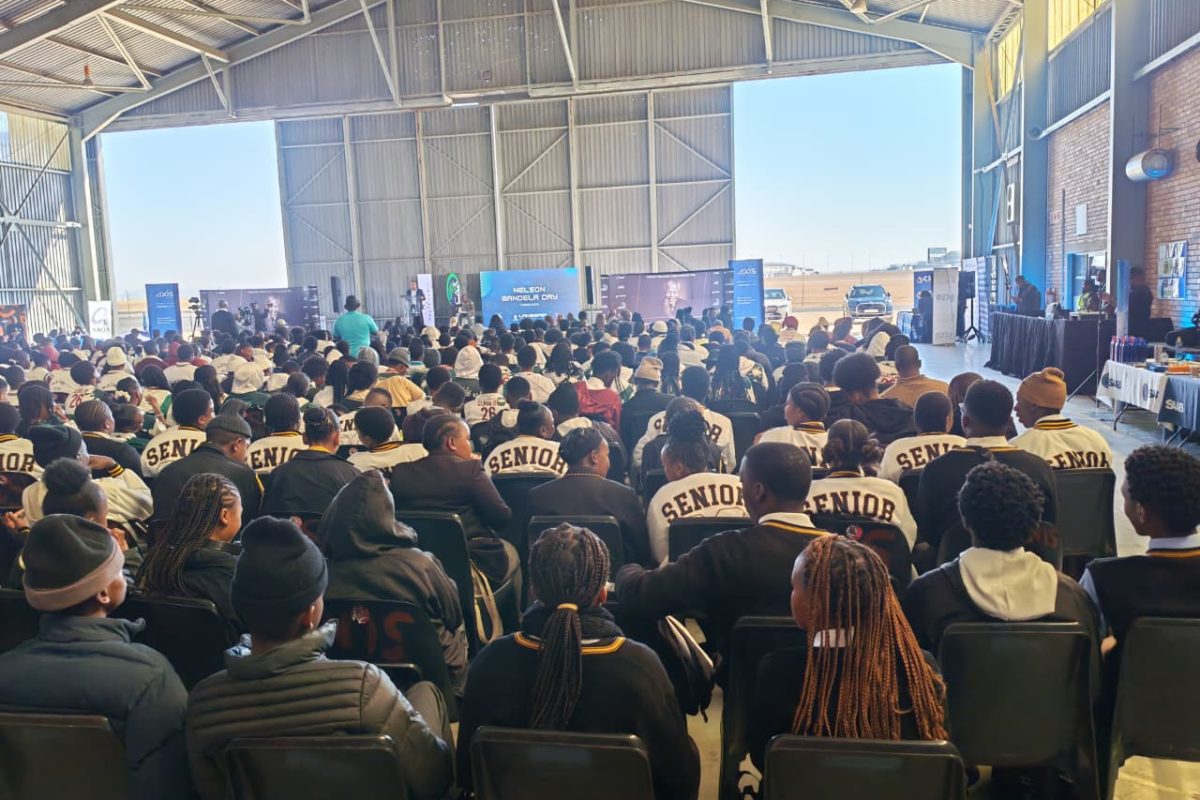
Johannesburg, South Africa: The aviation industry has always had a unique ability to gather diverse professions, disciplines and personalities into one room. Pilots, regulators, engineers, lawyers, economists, airport managers, meteorologists, medical practitioners, fuel specialists and academics all speak different technical languages, yet all depend on one another for the same outcome: safe and sustainable flight.
That reality was on full display at the 2026 National Aviation Conference (NAC), held on 6 – 7 May at Emperors Palace. Under the stewardship of Director of Civil Aviation Poppy Khoza, and guided expertly by programme director Leanne Mannas, the conference drew stakeholders from every corner of the aviation ecosystem. It was a timely gathering, and perhaps one of the most important in recent years.
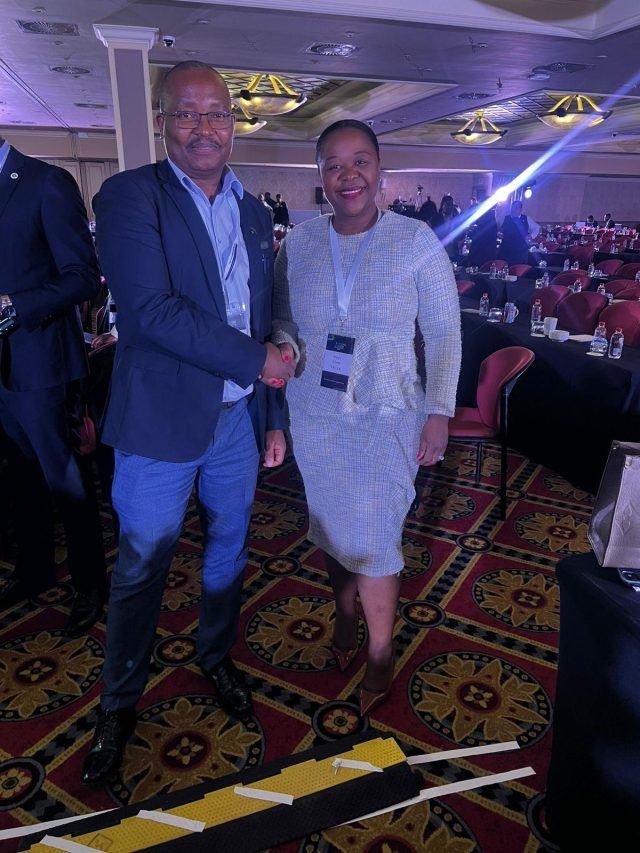
In welcoming delegates, Ms Khoza immediately situated aviation within the broader realities confronting the world. Ongoing geopolitical tensions, global instability, and growing concerns around aviation fuel security formed part of her opening reflections. These are not abstract concerns. The aviation sector is deeply exposed to global shocks, and recent years have reminded us how vulnerable interconnected systems can become when supply chains are disrupted or political tensions escalate.
Yet her message was not one of pessimism. It was a call for collaboration.
A recurring theme throughout the conference was the need for aviation to move away from silo thinking. Regulators cannot operate in isolation from industry. Airlines cannot function without properly capacitated training organisations. Airports, fuel suppliers, cybersecurity experts, medical practitioners and academia must all participate meaningfully in shaping the future of aviation.
This collaborative posture aligns strongly with current thinking within the International Civil Aviation Organization (ICAO), which continues to emphasise effective implementation, risk-based oversight and regional cooperation as central pillars of aviation safety governance.
One of the most significant announcements during the conference related to South Africa’s recent ICAO safety audit outcomes. Preliminary indications place South Africa at 95.12% effective implementation, a significant improvement from the previous score of 91% obtained in the 2023 audit. This positions South Africa among the top-performing aviation jurisdictions globally, ranking at number 8. This achievement cannot be understated – it speaks to the credibility of the oversight provided by the South African Civil Aviation Authority (SACAA).
For years, South Africa has maintained a respected reputation within global aviation circles. Our licences carry international credibility. Our aviation professionals are highly sought after across the world. Our safety oversight systems continue to attract recognition. These audit outcomes reaffirm that South African aviation remains anchored on globally respected standards and practices.
But strong audit scores should never breed complacency.
The NAC appropriately turned attention toward contemporary threats and emerging vulnerabilities. Cybersecurity featured prominently during discussions. The reality is that aviation is no longer merely about aircraft and airfields. It is now deeply intertwined with digital infrastructure, integrated communication systems, data management and increasingly automated technologies. A cyber vulnerability within aviation today has the potential to compromise operational continuity, passenger confidence and safety oversight itself.
The SACAA has already begun developing aviation cybersecurity guidance and risk-management frameworks to assist industry players in building resilient systems. The conversation at the NAC made it abundantly clear that cyber resilience can no longer be treated as an optional extra; it is now a core component of aviation safety.
Equally important were discussions around Risk and Performance-Based Oversight (RPBO), which SACAA is progressively implementing across the sector. The move away from purely compliance-driven regulation toward a more risk-informed oversight model reflects global regulatory evolution. Aviation today is too complex for regulators merely to tick boxes. Regulators and operators alike must understand evolving operational risks and respond proactively.
One of the more engaging sessions of the conference centred around the recently implemented compulsory ground school requirements within pilot training. Flying Jurist CEO’s Prof Angelo Dube, speaking on the issue, sought to locate the discussion beyond narrow compliance debates and instead frame it within broader questions of quality, safety, and the integrity of the South African aviation licence.
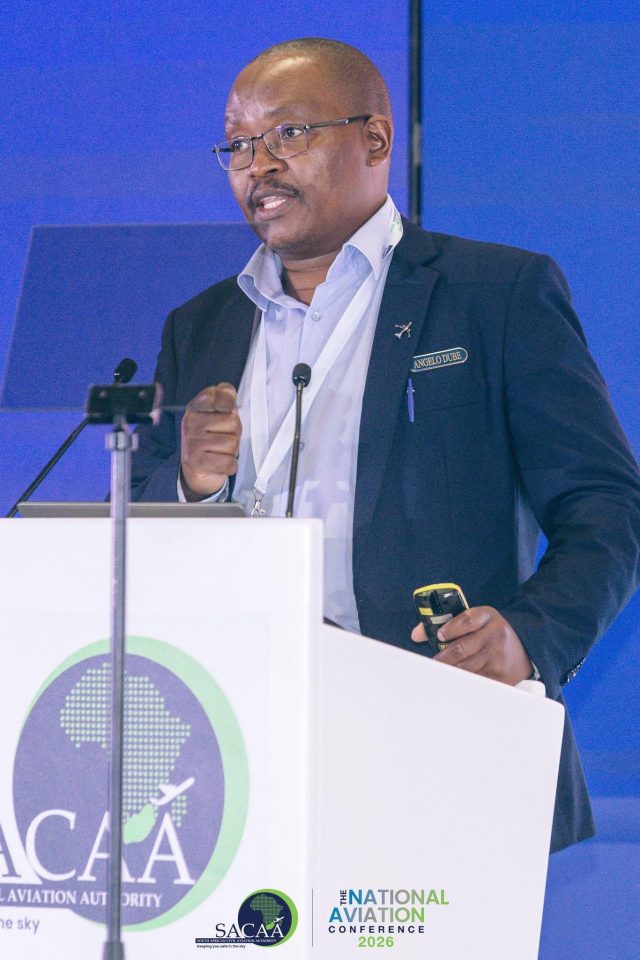
Prof Dube argued that pilot training cannot simply be treated as a commercial transaction. Aviation education, he noted, is fundamentally linked to public safety. The production of competent pilots is therefore not merely a private business matter, but one of national and international significance.
He further highlighted growing concern within the industry regarding the depletion of South Africa’s aviation skills pipeline. Airlines and airports across Asia, the Middle East, and Europe continue recruiting experienced South African pilots and controllers in significant numbers. While this sustained global demand speaks positively about the quality of South African training, it simultaneously places considerable pressure on the domestic aviation sector.
According to Prof Dube, airlines are increasingly recruiting Grade II flight instructors because they possess the operational experience required for airline environments. This has left Approved Training Organisations (ATOs) under strain, particularly as they now shoulder additional obligations associated with compulsory ground school instruction. The central question confronting the sector, he suggested, is therefore not simply whether regulation is necessary, but whether the industry possesses sufficient human resource capacity to sustain these standards effectively. Significantly, whether ATOs are doing their bit to replenish the instructor pipeline with competent personnel to roll out ground instruction.
Mental health discussions at the conference were equally significant and, frankly, overdue.
For too long, aviation globally has struggled with balancing safety oversight and compassionate mental health support. The conference discussions involving regulators, airlines and Designated Aviation Medical Examiners (DAMEs) reflected encouraging progress toward a more nuanced approach. Early intervention, support systems and preventative mechanisms featured strongly in the deliberations.
Importantly, the discussions also highlighted the realities facing student pilots and general aviation participants. Financial pressures often discourage trainees from self-grounding even when overwhelmed or mentally fatigued, particularly where training organisations impose penalties for missed lessons or bookings. These realities remind us that aviation safety cannot be divorced from broader human and economic conditions.
Closing the conference, Transport Minister Barbara Creecy reinforced the importance of infrastructure development, innovation and sustainable aviation growth. Her remarks on Sustainable Aviation Fuels (SAF) were particularly noteworthy. South Africa possesses significant agricultural and industrial potential to participate meaningfully in SAF production, but success will require coordinated action across multiple sectors of government and industry.
Ultimately, one statement by Ms Khoza captured the spirit of the conference best: aviation is built on trust.
Trust between regulator and operator. Trust between pilot and engineer. Trust between passenger and airline. Trust between nations connected through aviation.
As minister Creecy put it, the margins for error in aviation remain incredibly small, while the consequences of failure remain devastatingly large. That is why collaboration matters. That is why honest reflection matters. And that is why conferences such as the NAC remain essential – not as ceremonial gatherings, but as spaces where the industry collectively confronts its realities and charts a safer, more sustainable future for African aviation.
About the Author:
At the intersection of cockpit, courtroom, and classroom, Prof Angelo Dube brings a rare, lived perspective to aviation. A commercial pilot and Chief Executive Officer of Flying Jurist, he is also the driving force behind the Aviation Indaba – an influential platform shaping high-level industry dialogue across the continent.
In the global legal arena, he serves as President of the Society for International Aviation Law, while in academia he holds the position of Professor of International Law within the School of Law at UNISA. There, he leads the Aviation Law Working Group – a dynamic collective of pilots, regulators, researchers, and legal minds pushing the boundaries of aviation law and policy.
He writes here not from a single vantage point, but from the confluence of them all – and in his personal capacity.