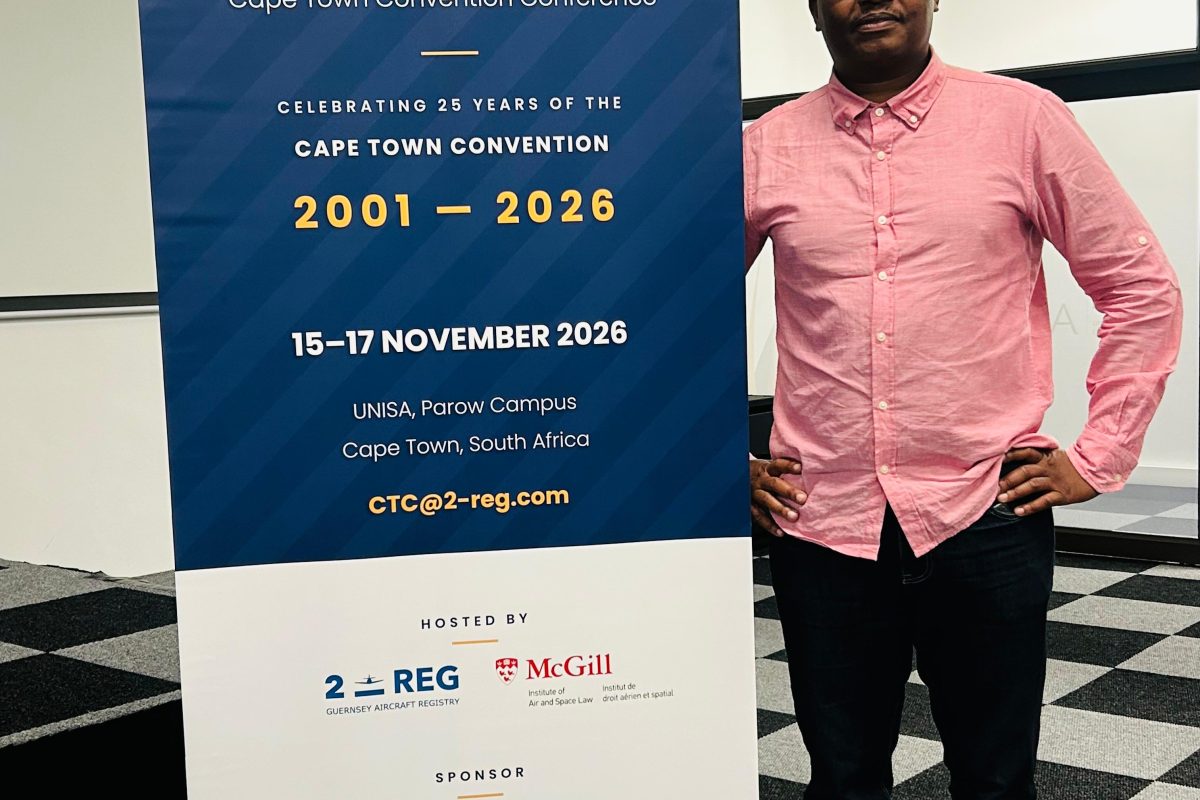
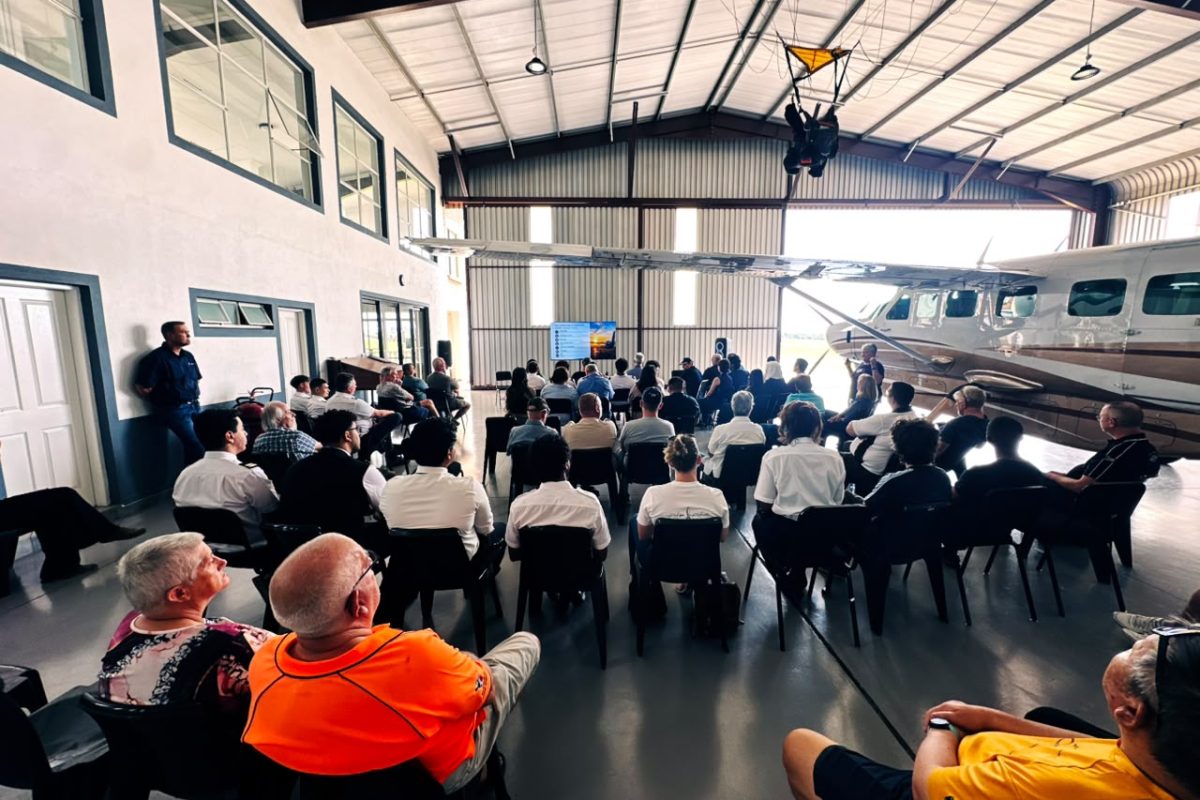
Cape Town, South Africa: More than 100 delegates from across the globe gathered at the University of South Africa (UNISA) in Cape Town for a two-day conference marking the 25th anniversary of the Cape Town Convention. Delegates examined its impact on aviation finance and the work still required to strengthen implementation.
The Convention provides legal protection to financiers and lessors of high-value mobile assets, including aircraft. It protects international interests and gives creditors remedies when contractual obligations are not met.
The conference was organised by 2-REG Guernsey Aircraft Registry in partnership with the McGill Institute of Air and Space Law, UNISA and Tuli & Co.
Reflecting on 25 years
Opening the proceedings, Sidhant Sharma, Director of 2-REG, recalled that 20 countries placed their faith in the Convention 25 years ago, committing to a framework intended to transform international asset financing. He considered Cape Town, the Convention’s birthplace, an appropriate place to examine its achievements, challenges and future direction.
The keynote address was delivered by Hilary Pullum, Solicitor General of Guernsey. She examined the Convention’s implications for a small island jurisdiction. Pullum outlined Guernsey’s implementation and the launch of its Aircraft Registry in 2013. Although the Convention has not been tested in Guernsey’s courts, she acknowledged the significant legal challenges it has faced elsewhere.
She paid tribute to Professor Sir Roy Goode, who chaired the group that initiated the Convention and passed away earlier this year, highlighting its five key objectives, four unique features and three points of international interest.
Eight panels, global perspectives
Eight panels examined the Convention’s impact, aviation finance, leasing remedies, regulatory developments and institutional support.
A panel moderated by Haanee Khan, Founding Managing Partner at Spencer West Kenya, examined what the Convention has achieved. David Bartlett, solicitor, arbitrator and guest lecturer at Leiden University, reminded delegates that its origins predate 2001. The initial study began in 1988, and the final text evolved considerably from the original proposals. He urged delegates to consider the ideas that shaped the final instrument, including those left out.
Nitin Sarin, Managing Partner at Sarin & Co, discussed the Convention’s application in India, focusing on the Kingfisher Airlines case, its first significant test in that jurisdiction. The case exposed implementation challenges and the need for government responsiveness. Sarin said subsequent progress provided a foundation for later matters involving SpiceJet and Go First.
South Africa: legally complete, practically untested
During a panel on aviation finance and leasing remedies, including IDERA and the Cape Town Discount, Advocate of the High Court and Deputy President of the Society for International Aviation Law, Anne-Lize Lourens suggested that the country may have moved too quickly in incorporating the Convention into domestic law.
South Africa ratified the Convention in January 2007, and it entered into force in May that year. Parliament incorporated it into domestic law through the Convention on International Interests in Mobile Equipment Act 4 of 2007. The Act incorporated the Convention in its entirety, although its relationship with other domestic laws, particularly insolvency legislation, remains in question.
The Companies Act 71 of 2008 may come into play when Convention remedies are enforced. Their interaction may generate litigation and undermine the predictability and efficiency intended by the Convention. During a panel on regulatory developments and state practice, South Africa’s position was described as “legally complete but practically untested”, with no definitive case demonstrating how the Convention would be applied locally.

Kenya provided a useful comparison. It ratified the Convention in 2006 but only enacted it into domestic law in 2013. Its compliance ratings fluctuated. One notable feature of Kenyan legislation is that it gives the Convention precedence over other laws. The comparison showed that ratification alone is insufficient. Effective implementation, legal certainty and consistent judicial application are essential if the Convention is to deliver its intended benefits.
Connecting academia and industry
Professor Steven Truxal of Leiden University described teaching approaches that bring the instrument to life, including simulations in which students assume the roles of lessors and lessees during negotiations. He emphasised combining practitioner experience with academic theory.
Professor Angelo Dube, Distinguished Professor of Aviation Law at UNISA, who also doubles up as the Group Chairman of the Flying Jurist Group of Companies, supported the view that aviation law and the Cape Town Convention should be core university subjects. He urged universities to work with industry when developing postgraduate research, ensuring that projects address real sector challenges and produce practical solutions.
Other discussions included Ayberk Dulgeroglu’s examination of Article 39, particularly declared non-consensual rights and interests relating to air navigation charges and their recovery.
Does membership reduce financing costs?
The final panel brought together finance experts to consider the financial implications of joining the Convention. While membership can strengthen legal certainty and creditor protection, delegates cautioned that signing the Convention does not automatically lead to lower lending rates. Financing decisions depend on several factors, and the Convention is only one element in a wider risk assessment.
Looking to the next 25 years
The conference enabled international exchange and reflection. Its discussions made clear that the Convention’s effectiveness depends not simply on ratification, but on how states implement, interpret and enforce its provisions.
Guernsey, India, Kenya and South Africa each offered distinct lessons. As aviation evolves, legal certainty, effective creditor protection and cooperation among regulators, financiers, academics and practitioners will remain critical.
The 25th anniversary was about more than celebrating an important international instrument. It was an opportunity to take stock of achievements, confront remaining shortcomings and renew the commitment to ensuring that the next 25 years build on the foundations laid in Cape Town in 2001.
About the author:
Vuyolwethu Siyolise Musoke, Correspondent
Vuyo is currently busy with her LLM by full research and is focusing on the area of aviation law and trade.