Cape Town, South Africa: There is a question that aviation cannot afford to keep answering with the same old solutions: where will tomorrow’s aviation professionals come from?
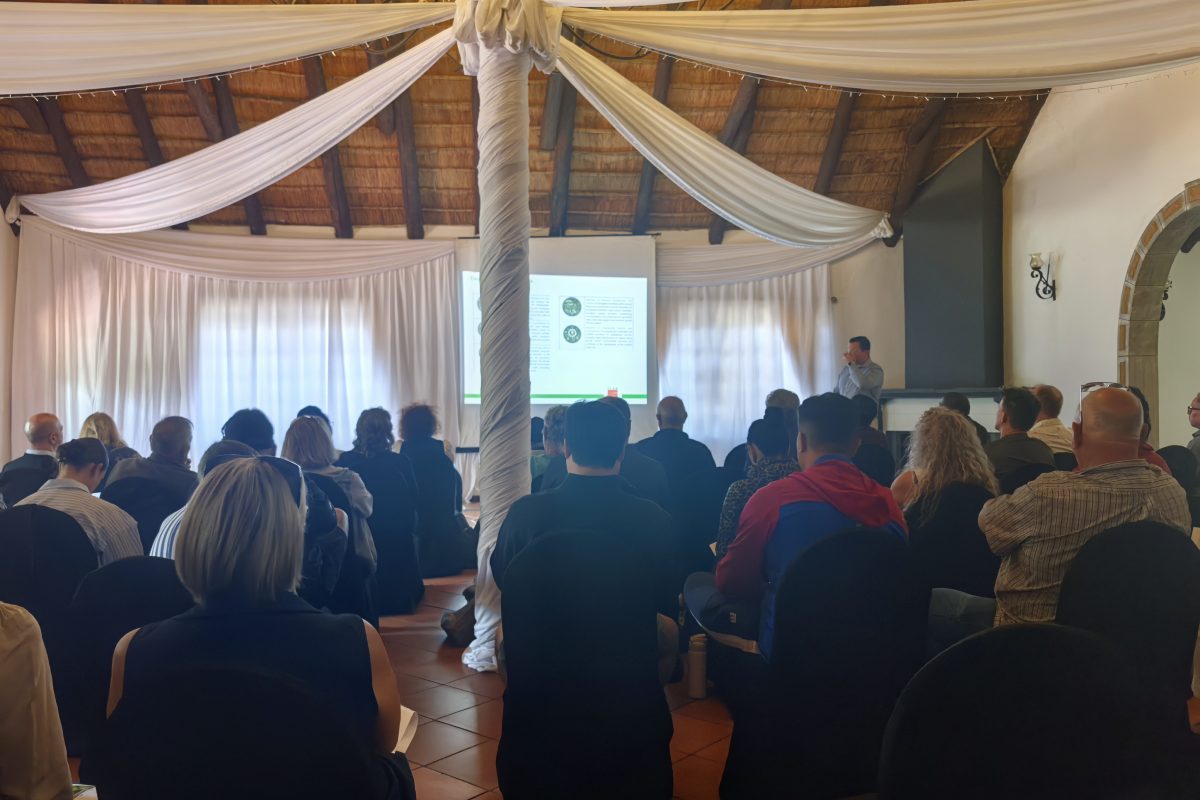
At the recent Aeronautical Society of South Africa (AESSA) Conference in Stellenbosch between 22 and 24 July 2026, Prof Angelo Dube, commercial pilot, Group Chief Executive Officer at Flying Jurist, and Distinguished Professor of Aviation and Aeronautical Studies at the University of South Africa (UNISA), offered an answer that went beyond the familiar calls for “more training” and “more graduates”.
His keynote address, titled “The Future of Aviation Talent: Reimagining Universities, Industry and the Next Generation of Aviation Professionals,” challenged the sector to rethink what it actually means to develop aviation talent.
And perhaps that is precisely why the address deserves attention.
The aviation industry has spoken about skills shortages for years. ICAO has its Next Generation of Aviation Professionals (NGAP) programme. Industry forecasts point to substantial future demand for pilots, maintenance technicians and cabin crew. Africa is expected to require tens of thousands of additional aviation professionals over the coming decades.
But Prof Dube asked delegates to look beyond the numbers.
His proposition was striking: the aviation talent problem is not primarily a human resources problem. It is a governance problem and a knowledge ecosystem problem. That distinction matters.
It is easy to say that Africa needs more pilots, engineers, air traffic controllers, lawyers, safety specialists and other professionals. It is much harder to ask whether the institutions responsible for producing those professionals are actually connected to one another.
Universities teach. Industry operates. Regulators regulate. Professional bodies develop standards. Civil society creates programmes and opportunities. Yet too often these actors work alongside one another rather than with one another. And aviation does not allow for such fragmentation.
Aviation is bigger than flying
One of the strongest aspects of the keynote was its rejection of the tendency to reduce aviation to aircraft and pilots. Aviation is an interconnected knowledge system involving law, economics, cybersecurity, psychology, artificial intelligence, meteorology, insurance, manufacturing, airport planning, finance, human factors, environmental science, drones, space operations and much more. This is an important point, particularly for Africa.
The continent is simultaneously confronting the demands of conventional aviation growth while preparing for sustainable aviation fuels, advanced air mobility, unmanned aviation, digitalisation and the emerging interface between aviation and space.
So, what kind of graduate should universities be producing?
Prof Dube’s answer was equally clear. The next generation cannot simply be technically competent. They need systems thinking, digital literacy, leadership, communication, ethics, adaptability, entrepreneurship, interdisciplinary collaboration and a commitment to lifelong learning. In aviation, that must also be accompanied by regulatory awareness and a safety-first culture.
Let’s pause there.
This is where the keynote moves from being an academic argument to becoming an industry challenge.
Universities cannot do it alone
Prof Dube was particularly critical of the traditional separation between universities and industry. He argued for an integrated University–Industry–Regulator–Civil Society Partnership Model, where these different actors collectively contribute to the development of aviation talent. That means moving beyond the occasional internship or industry representative sitting on an advisory board.
It means joint appointments, industry professors, practicing academics, regulators in residence, shared laboratories, joint curriculum design, applied research, executive education, professional mentoring and innovation hubs. In other words, it means making the aviation ecosystem itself part of the classroom.
This is also where Prof Dube’s position as both an academic and a practicing commercial pilot becomes particularly relevant. His argument for a more porous relationship between academia and professional practice is not theoretical. He has argued that academics in professional fields should be able to remain connected to practice because knowledge should flow in both directions. The idea of an academic rooted in theory only without industry practice is ill-suited for today’s skills transfer environment.
From talking about skills to actually building them
Perhaps the most encouraging part of the keynote was that it did not stop at diagnosis. Prof Dube pointed to initiatives already emerging around UNISA’s Catalytic Niche Area in Aviation and Aeronautical Studies, including the University’s investment in an airfield in eastern Pretoria as a base for multidisciplinary aviation and aerospace training and research.
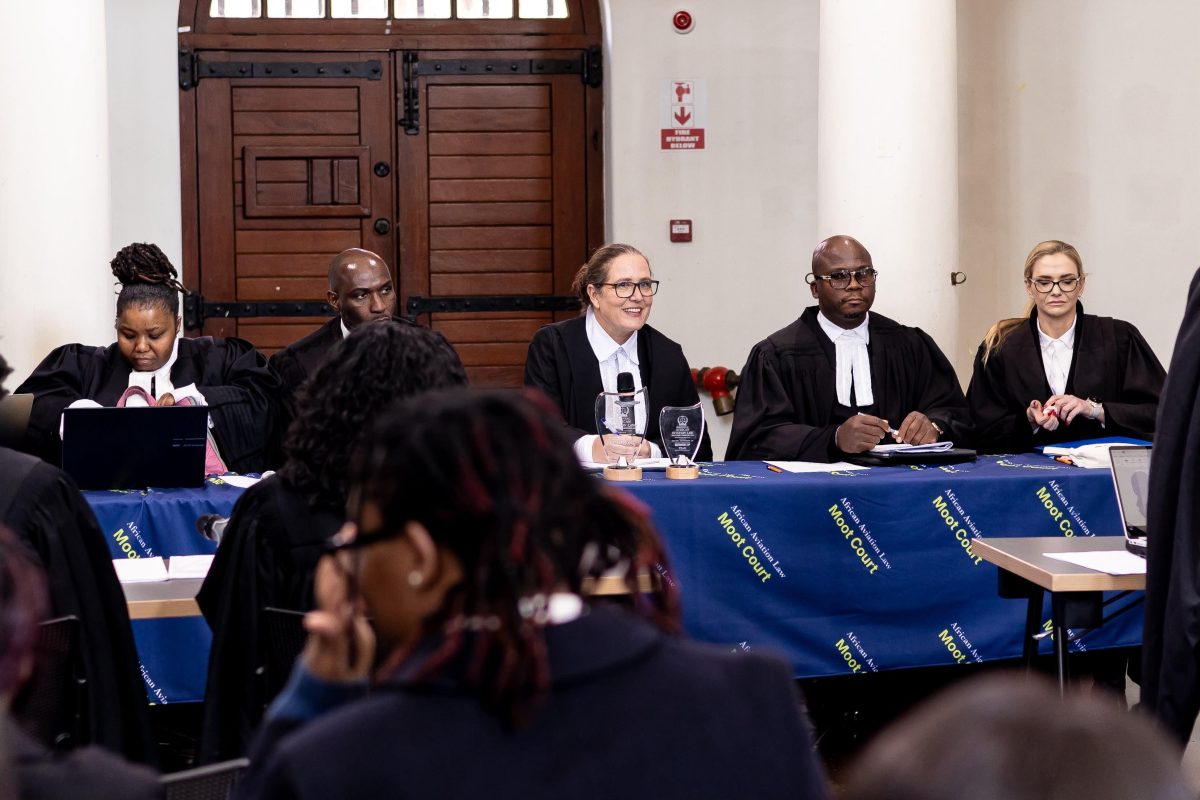
He also connected this thinking to industry-facing initiatives such as the Aviation Indaba and the inaugural African Aviation Law Moot Court Competition, arguing that conversations must eventually produce interventions. That is an important philosophy.
Conferences are useful. Reports are useful. Keynote addresses are useful. But aviation will not solve its skills challenge through speeches alone. The keynote proposed what Prof Dube calls the GARTIR Model, built around an Aviation Knowledge Ecosystem with six interconnected pillars: knowledge generation, application, regulation, transfer, innovation and renewal. It is a useful way of thinking about the problem because it recognises that no single institution possesses all the answers.
Universities generate knowledge. Industry applies it. Regulators shape and safeguard it. Professional bodies transfer it. Entrepreneurs and innovators transform it. And lifelong learning renews it. Break one link and the chain weakens.
For Africa, this is more than an academic debate. The continent wants greater connectivity, stronger aviation markets, advanced technologies and a more integrated air transport system. None of that will happen without people capable of designing, operating, regulating and innovating within that system.
Prof Dube’s message at Stellenbosch was therefore not simply that Africa needs more aviation professionals. It was that Africa needs to build the ecosystem that produces the right professionals, continuously. And perhaps that is the conversation aviation should now be having.
Vuyolwethu Siyolise Musoke, Correspondent
Vuyo is currently busy with her LLM by full research and is focusing on the area of aviation law and trade.