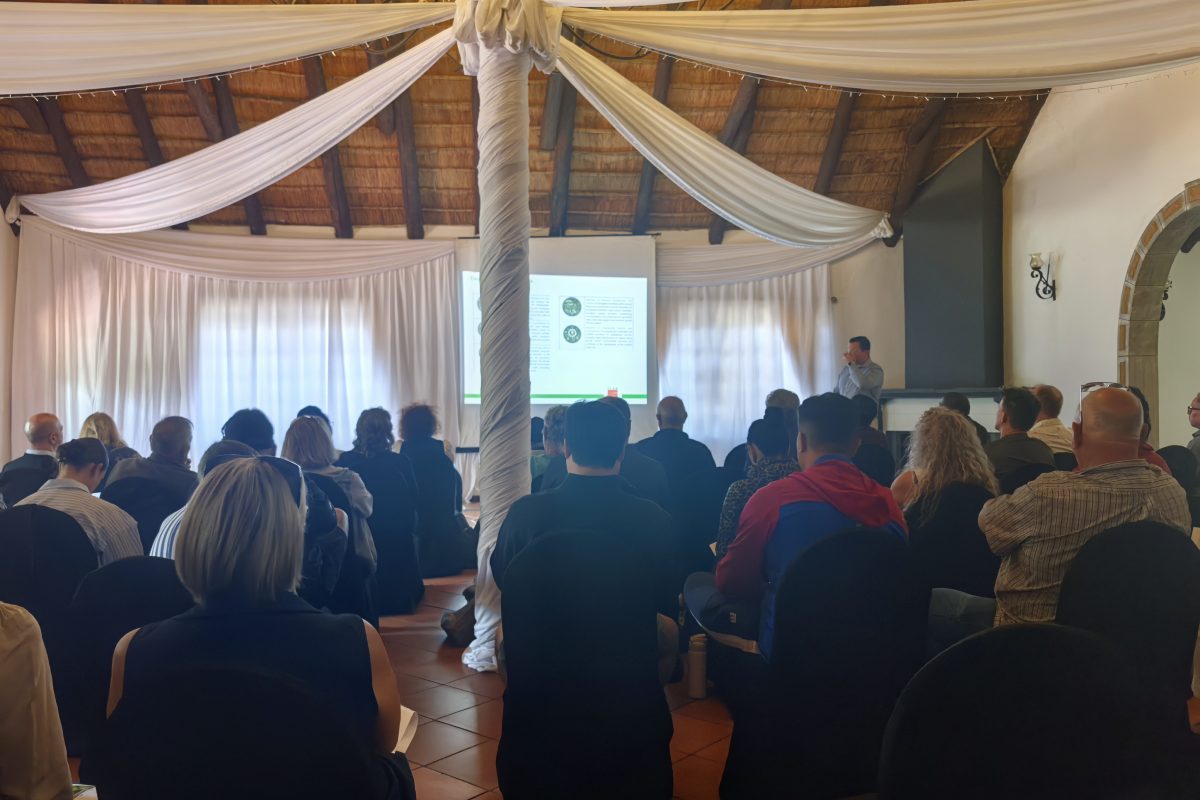
Pretoria, South Africa: The Second Aerotropolis Symposium got underway today, bringing together an interesting mix of academia, government and industry around a question that is becoming increasingly important for Africa: how do we turn aviation infrastructure into wider economic opportunity?
Hosted through the UNISA Gauteng Region, in collaboration with the College of Law, College of Economic and Management Sciences and the College of Science, Engineering and Technology, the symposium runs from 9 to 11 September 2026. The final day will turn the spotlight to postgraduate students, with Masters and Doctoral researchers presenting their work in aviation.
That is significant. An Aerotropolis cannot be built by engineers, planners or aviation specialists alone. It requires economists, lawyers, scientists, policymakers, businesses and communities. It also requires a pipeline of young researchers who are prepared to interrogate the problems facing the sector and propose solutions.
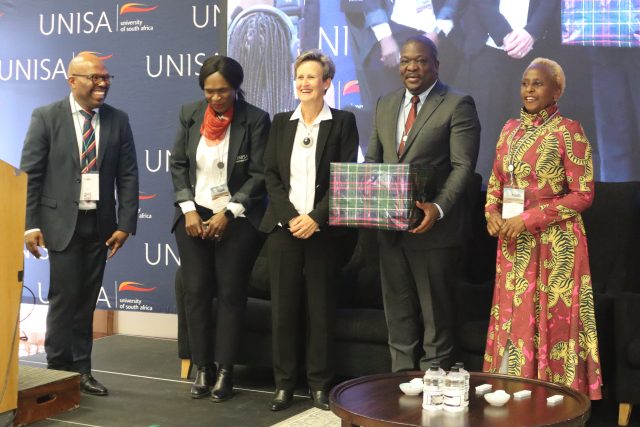
Opening the symposium, Director of the UNISA Gauteng Region, Dr Erin Naudé, set out the region’s vision for the Aerotropolis Project. Her remarks also situated the discussion within the broader African aviation agenda, including the Single African Air Transport Market (SAATM). There is a growing recognition that universities cannot simply observe these developments from the sidelines. They have to participate in shaping them.
The address by the Executive Mayor of Ekurhuleni, Alderman Nkosindiphile Xhakaza brought the discussion firmly into the practical realities of the Aerotropolis.
The experience around the OR Tambo Special Economic Zone provides an important case study. More than 2,000 jobs have reportedly been created, but the Mayor’s point was that job creation should not be measured only in rands and numbers. It must also be understood in terms of what it does to communities in Vosloorus, Katlehong, Thembisa and surrounding areas.
Connectivity sits at the centre of this story.
Roads supporting the airport, cargo connectivity for perishables, agro-processing and the movement of manufactured goods to markets around the world all depend on an ecosystem that works. Jewellery manufacturing is one example of an industry that has benefited from the aviation-related economy around OR Tambo.
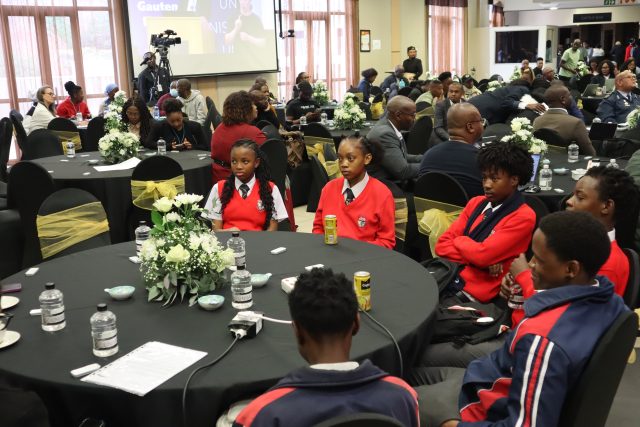
This is why the Aerotropolis cannot simply be reduced to an airport surrounded by businesses. It is about the relationship between the airport and the economic geography around it.
The Mayor spoke about the need for multimodal thinking, bringing air, rail and road infrastructure into a more integrated system. He also identified several prerequisites for success: densification of industrial sites to generate demand, stronger digital infrastructure, integrated linkage routes, and more efficient customs and clearance processes.
Perhaps equally important is the issue of bureaucracy.
Investment does not wait forever for regulatory approvals. An Aerotropolis that promises connectivity but creates regulatory delays can quickly lose its competitive advantage. Ekurhuleni’s investment conferences, land availability and engagements with industry are therefore part of a deliberate attempt to attract and facilitate economic activity.
The contribution of tourism was also instructive. The city’s hosting of the Africa Golf Tourism Conference at Birchwood demonstrated the value of bringing tourism operators, regulators and public-sector departments into the same conversation. These engagements allow government to understand its clients better, while industry gains a clearer understanding of the public-sector environment.
The symposium also looked beyond physical infrastructure.
Joining virtually from the United Kingdom, airport planner and consultant Jonathan Fitzgerald offered an interesting perspective on the role UNISA could play in aviation education. His emphasis on short learning programmes raises an important question about how universities can respond more quickly to the changing skills requirements of the aviation industry.
Our Group Chairman at Flying Jurist, Prof Angelo Dube, who also doubles up as a Distinguished Professor (Aviation and Aeronautical Studies) at the College of Law at UNISA, had an opportunity to contribute to that conversation from another angle: the rural aviation economy. His talk flowed from the work that he does as a founding member of the Engaged Scholarship on the Rural Aviation Economy (Project ESRAE), under the leadership of Adv Konanani Raligilia.
He began his talk by zoning in on the global aviation skills gap, which ICAO has identified as a priority, and noted that this cannot be addressed by governments and industry alone. Universities and civil society have a role to play.
This is part of the thinking behind Project ESRAE. The project is engaging operators, municipalities, civil society and rural communities around the economic possibilities associated with South Africa’s many smaller airfields.
The question is a simple one, but it deserves serious attention:
What economic opportunities are we losing if we allow rural aviation infrastructure to remain disconnected from the communities around it?
With engagements in places such as Kroonstad, the Karoo and North West, Project ESRAE is exploring how awareness, capacity building and entrepreneurship can bring rural communities closer to the aviation ecosystem.
And perhaps that is one of the most important messages from day one of this symposium. The Aerotropolis is not only about what happens around OR Tambo. It is about understanding connectivity as an economic system – from the major airport to the regional airfield, from the cargo terminal to the farm, from the university lecture room to the community.
There are still two days to go.
And if day one is anything to go by, the conversation is only beginning.
About the Author:
At the intersection of cockpit, courtroom, and classroom, Dist. Prof Angelo Dube brings a rare, lived perspective to aviation. A commercial pilot and the Group Chairman of the Flying Jurist Group of Companies, he is also the driving force behind the Aviation Indaba – an influential platform shaping high-level industry dialogue across the continent.
In the global legal arena, he serves as President of the Society for International Aviation Law, while in academia he holds the position of Distinguished Professor (Aviation and Aeronautical Studies) within the College of Law at UNISA. There, he leads the Aviation Law Working Group – a dynamic collective of pilots, regulators, researchers, and legal minds pushing the boundaries of aviation law and policy. Prof Dube is also a founding member of the Engaged Scholarship on the Rural Aviation Economy (Project ESRAE) which seeks to optimise rural communities’ access to the aviation economy across South Africa.
He writes here not from a single vantage point, but from the confluence of them all – and in his personal capacity.